
Shelley: love, death & philosophy
SMP director Ted Gooda reports back from a recent Shelley event in London
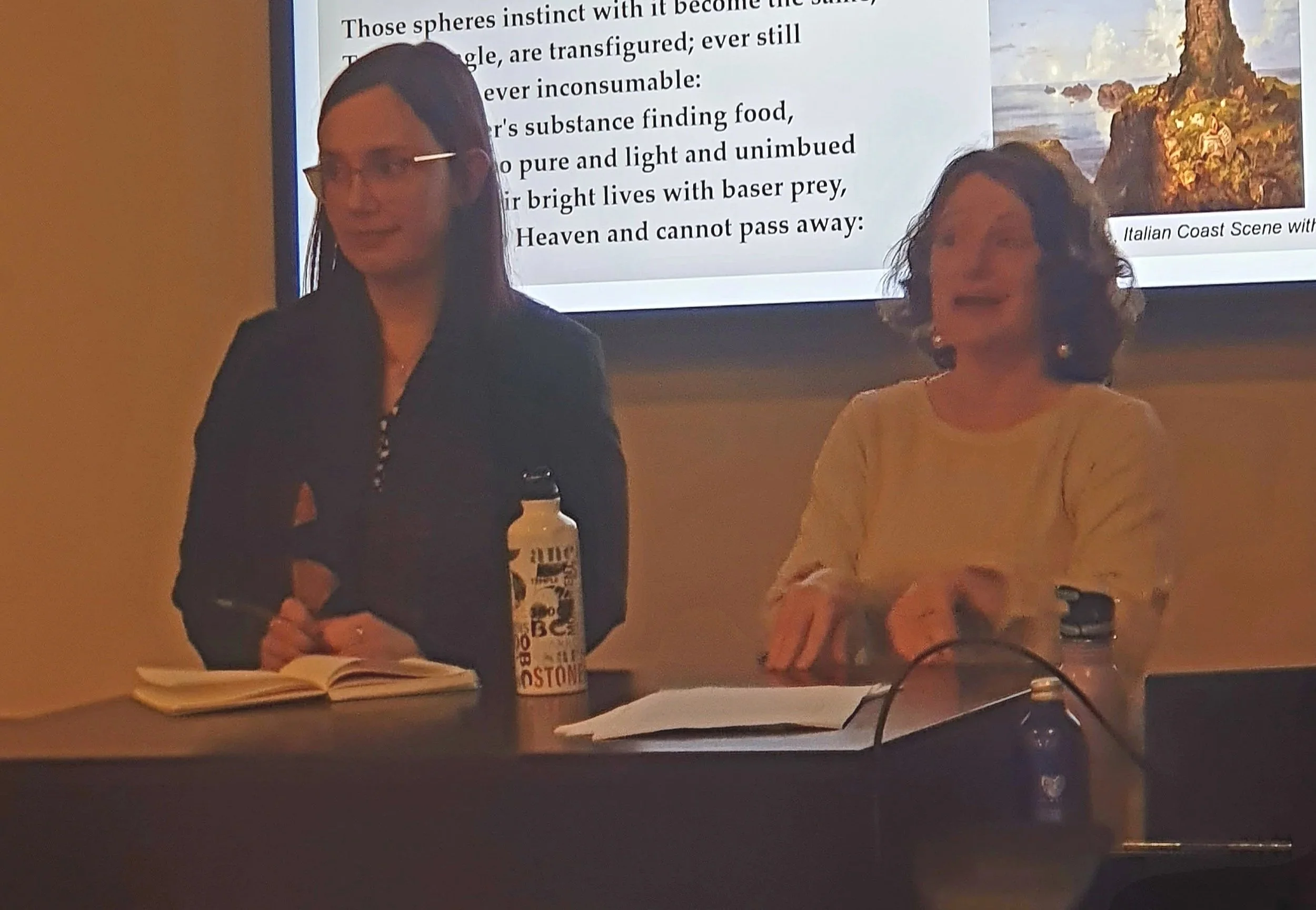
Dr Pauline Hortolland and Dr Merrilees Roberts
It’s always a treat to hear the experts discuss the works of Shelley.
This week I felt as if I was going back to school when I hopped on a train to London to attend an international panel seminer entitled Love and the Posthumous in P.B. Shelley at Senate House, part of a series of free sessions from the Institute of English Studies in the School of Advanced Study at the University of London.
The first speaker was Pauline Hortolland, Senior Lecturer in English Literature (Maîtresse de conférences) at the Université Marie et Louis Pasteur, Besançon, France.
Dr Hortolland completed her PhD, entitled ’Percy Shelley and the Event of Poetry: Mediation, Performance, Virtuality’, in 2023 at Université Paris Cité.
The second speaker was Merrilees Roberts, a Teaching Associate in Literary Criticism & Theory in the English Faculty at the University of Cambridge.
Dr Roberts is the author of Shelley’s Poetics of Reticence: Shelley’s Shame (2020) and was an organiser of ‘The Shelley Conference 2024: Posthumous Poems, Posthumous Collaborations’, held at Keats House Museum, London.
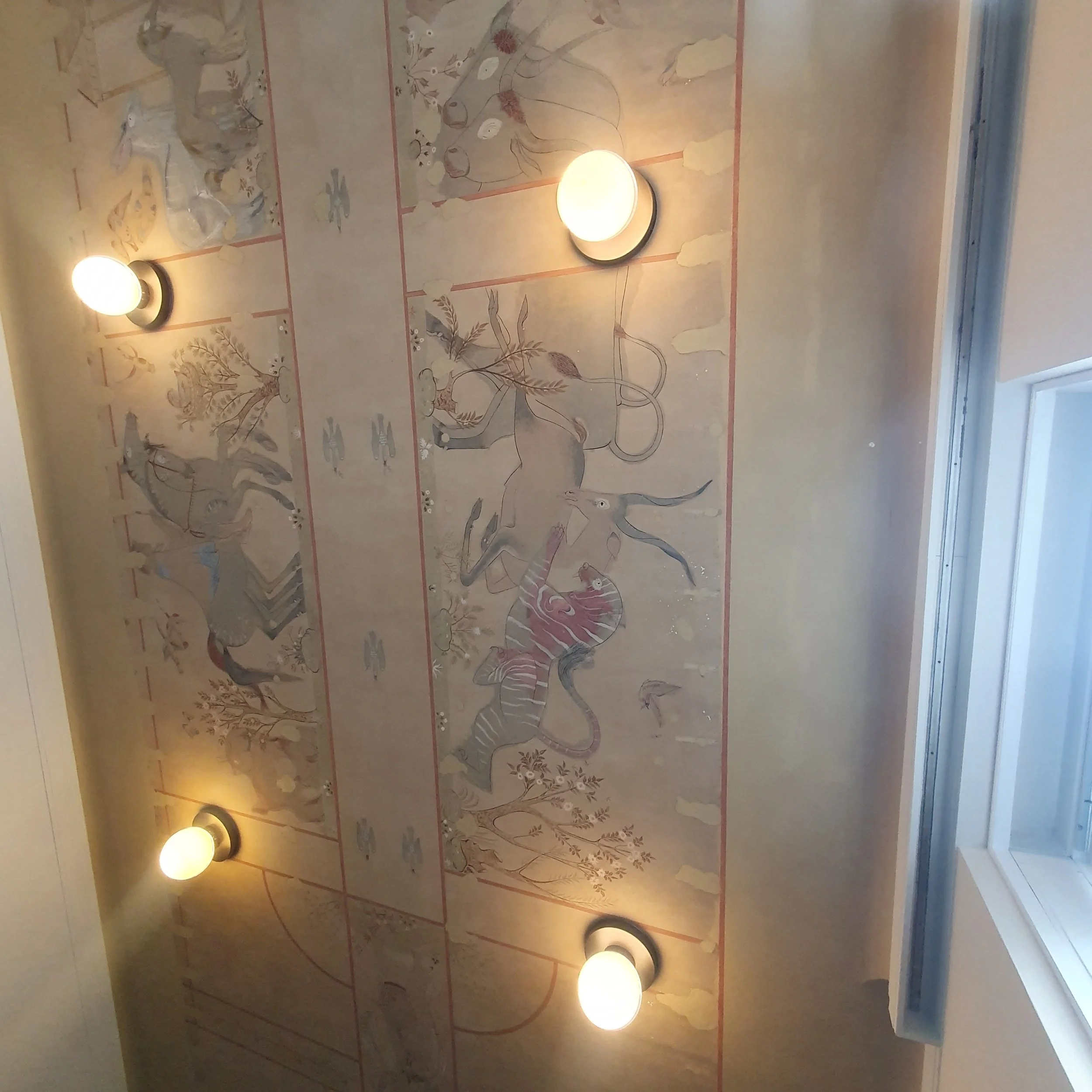
The ‘Painted Ceiling Room’ at Senate House, featuring a delicately restored, hand-painted ceiling dating back to 1875, originally created by suffragists Rhoda and Agnes Garrett.
Around 40 of us were gathered beneath in Room 349, otherwise known as the ‘Painted Ceiling Room’ to listen to the two speakers.
Dr Hortolland’s paper was based around A Defence of Poetry and argued that for Shelley, ‘love’ is not only a popular theme in poetry and a value once forged by poets, but also a way of reading which gives a never-ending posthumous ‘power’ of poetry.
She described how Shelley was obsessed with the interplay between different historical epochs, and explored how Shelley imagined the reception of his poems by future readers.
Dr Hortolland quoted this well-known section of Shelley’s essay:
All high poetry is infinite; it is as the first acorn, which contained all oaks potentially.
Veil after veil may be undrawn, and the inmost naked beauty of the meaning never exposed.
A great poem is a fountain forever overflowing with the waters of wisdom and delight; and after one person and one age has exhausted all its divine effluence which their peculiar relations enable them to share, another and yet another succeeds, and new relations are ever developed, the source of an unforeseen and an unconceived delight.
I particularly enjoyed this image of the veil and the idea that no amount of interpretation can exhaust a true work of art because it delivers an eternal truth.
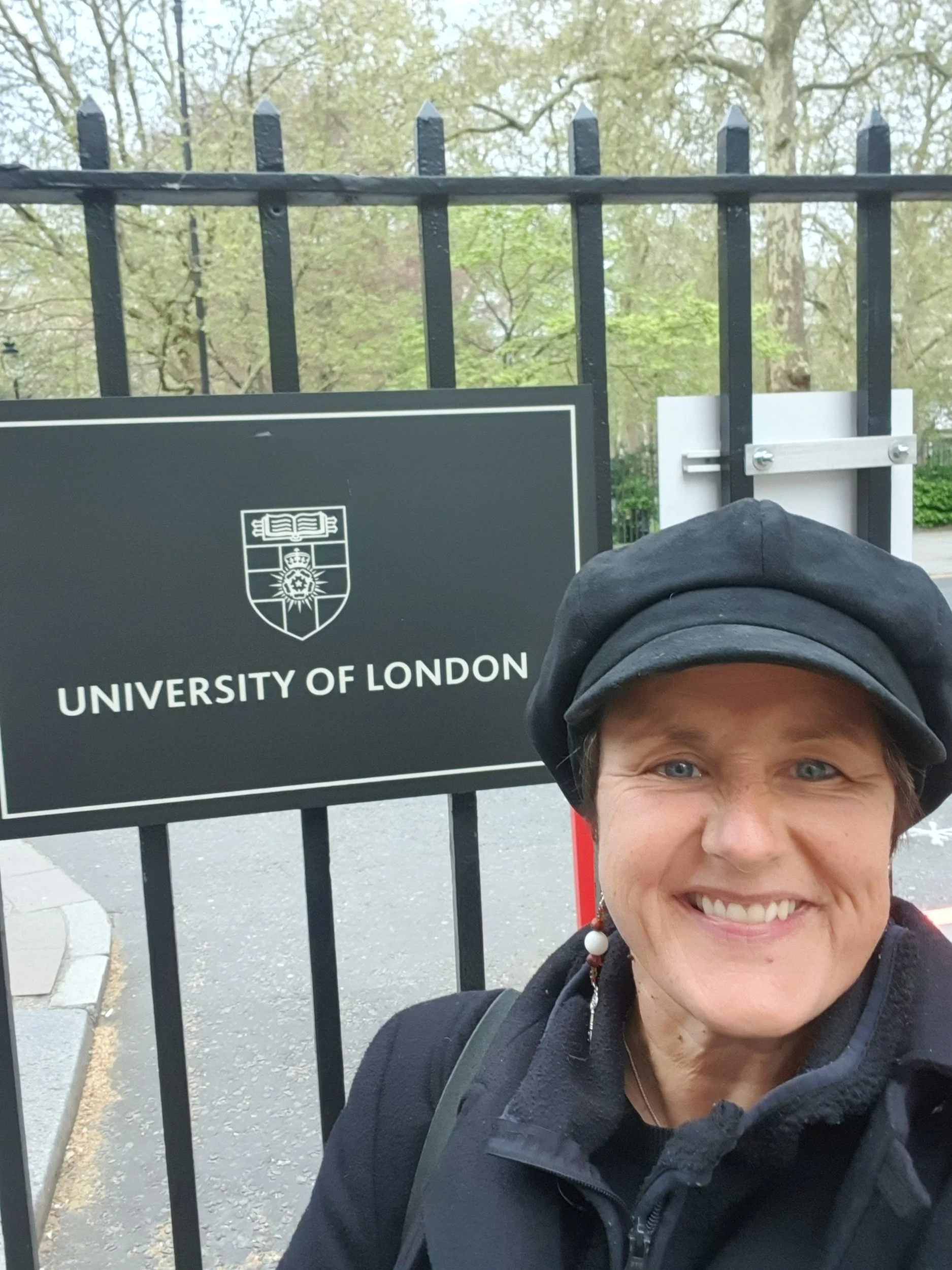
Ted Gooda at the University of London
Dr Roberts’ paper was centred on Shelley’s Epipsychidion and was entitled Death, Eros and Inflammation.
Roberts suggested that Shelley’s long poem, addressed to Countess Teresa Viviani while she was imprisoned in a convent (whom he called ‘Emily’) actually parodies Neoplatonic philosophy and demonstrates Shelley’s self-mocking interest in the intellectual rather than the physical body.
The poem is traditionally read as an exploration of spiritual love and ideal beauty, and seems to reject conventional, monogamous marriage in favor of free love.
Roberts argued that the poet-lover creates an eros that, ironically, suffocates the body of the lover. His vision of erotic love is also a poisonous breath. The poem also shows Shelley’s interest in the way that the body decays after death.
It was described as one audience members as a ‘breathless poem’, sucking the air from the reader as it does for the lover.
Both speakers emphasised the ways in which Shelley wrote essays and poetry that deliberately explored and challenged the pervading philosophical ideas of the day. It was a very enjoyable and thought-provoking way to spend an evening — and always good to be in the presence of fellow Shelley-enthusiasts.