
SMP at the Bodleian
SMP director Ted Gooda discusses her encounter with precious Shelley artefacts as part of the SMP team’s recent visit to Oxford
Members of the Shelley Memorial Project team travelled from Sussex to Oxford on Friday 27th March for a very special encounter. We had arranged to meet Stephen Hebron in the foyer of the Weston Library and were escorted to the Bahari Room on the first floor — where an intriguing array of objects were laid out before us.
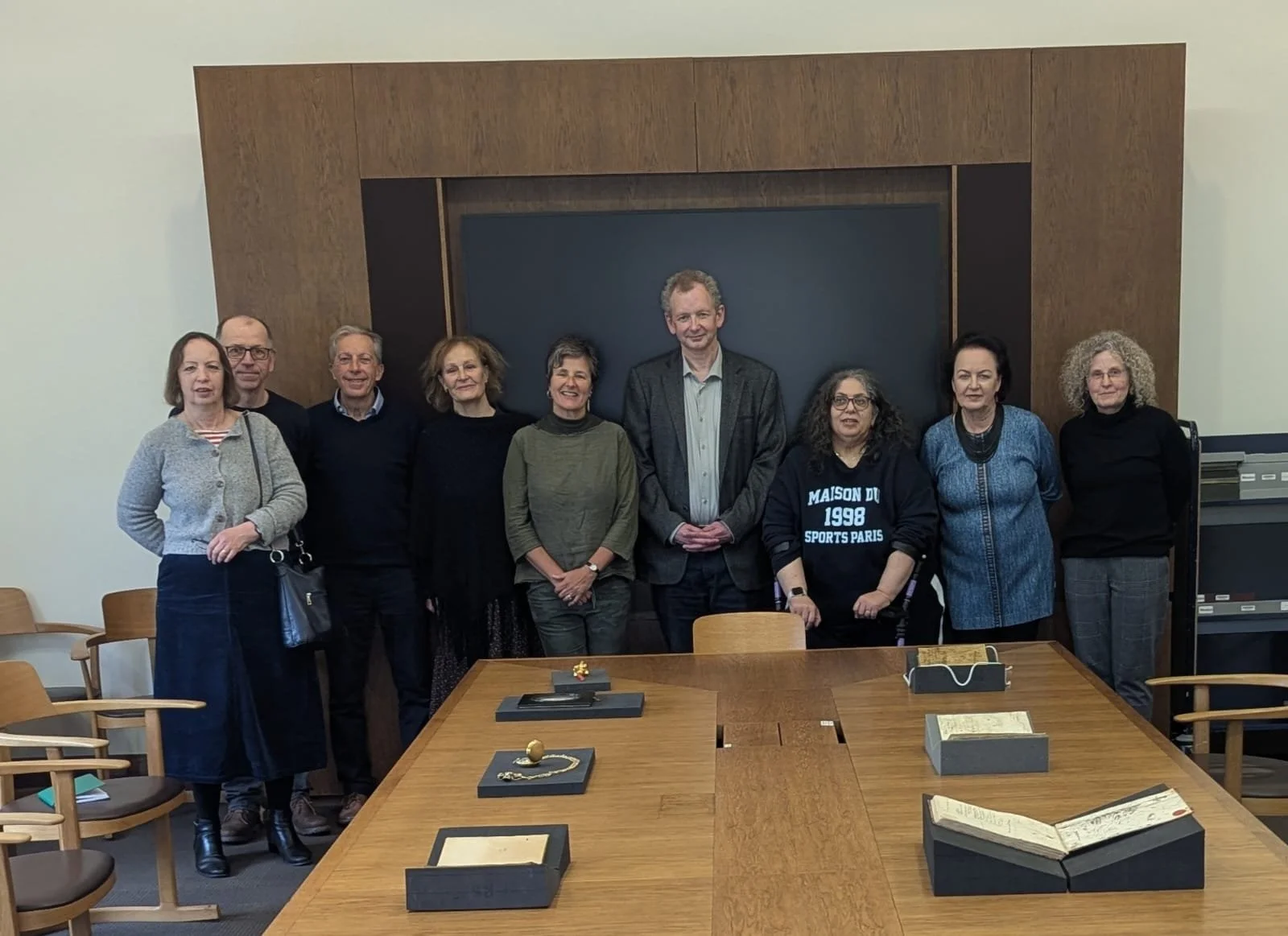
Carol Hayton, David Hide, Stephen Sandham, Sarah Nuttall, Ted Gooda, Stephen Hebron, Sara Loewenthal, Sarah Wilson, Pauline Howley
Hebron, who is a Curator of Special Projects at the Bodleian Libraries, is a specialist in 18th-19th century British literature and has authored several publications for the Bodleian, including Shelley's Ghost, had made the selection from the artefacts in the permanent Shelley archive.
The items in the collection were originally bequeathed to Percy Florence Shelley, the son and only surviving child of Mary and Percy Bysshe Shelley upon Mary’s death in 1851.
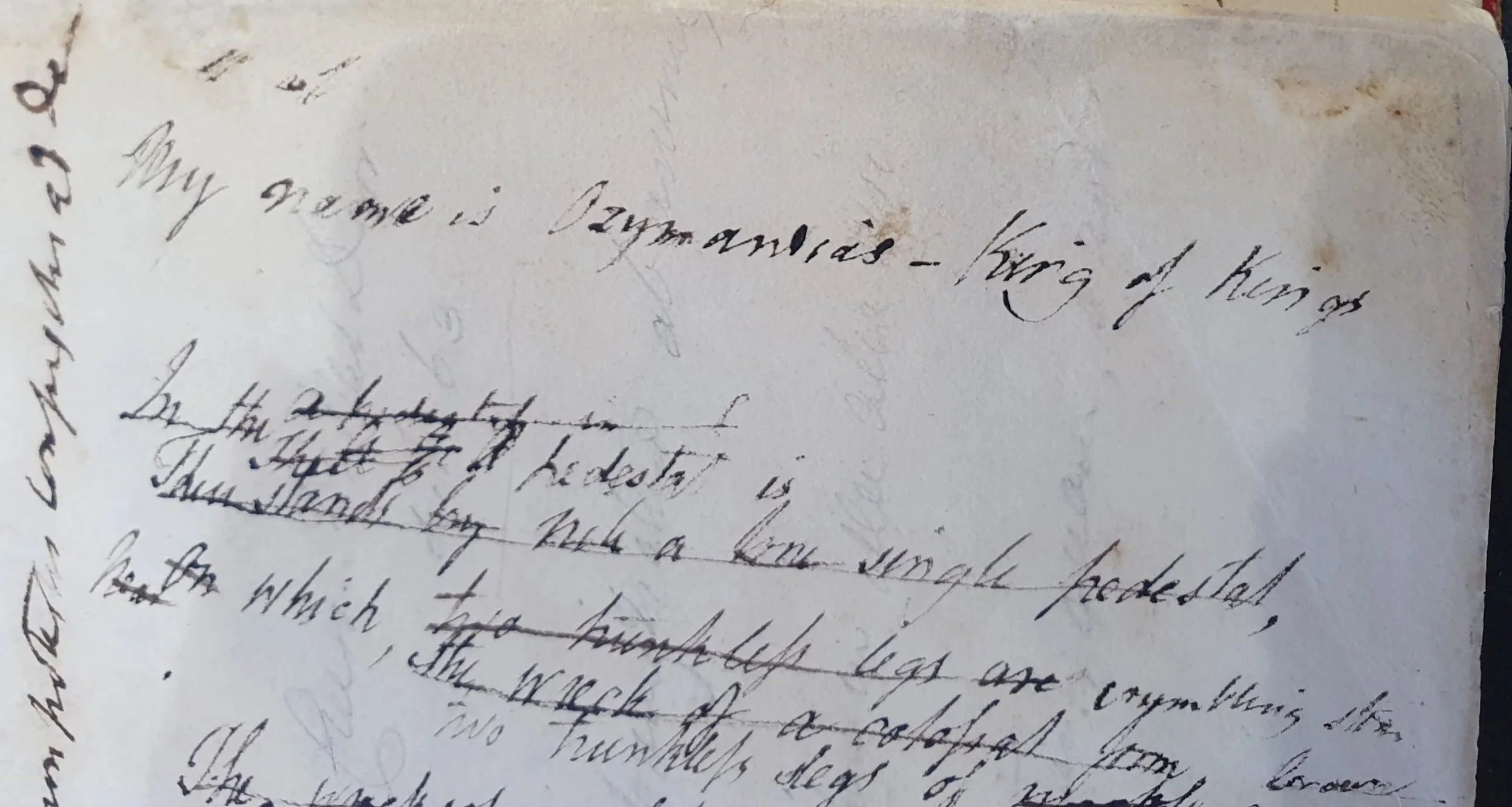
Extract from notebook page showing drafting of Ozymandias
The collection was apparently split up in the 1890s, but acquired by the Bodleian Library more than 150 years later.
Several of the artefacts were notebooks. One contained a draft and notes for To a Skylark. Another showed a draft and then the fair copy of Ozymandias, revealing a dramatic contrast between the two — and evidence of the self-imposed time pressure resulting from a friendly sonnet-writing contest with another poet, Horace Smith.
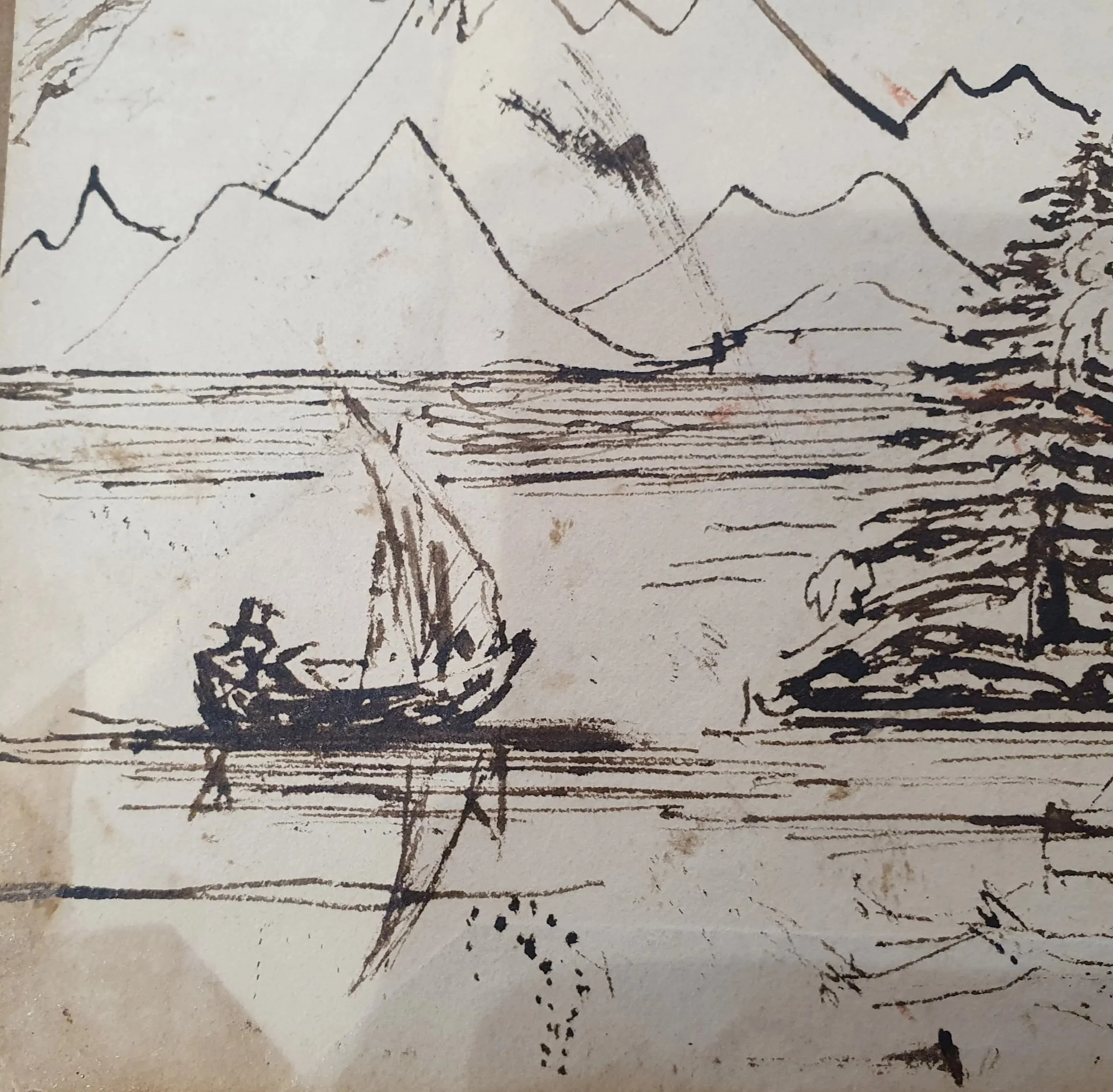
Sketch detail from Mont Blanc notebook
Yet another of the notebooks revealed sketches and drafts of Mont Blanc.
There was also a ‘drowned notebook’ recovered from the wreck of Don Juan after Shelley’s death; the watermark staining all too vivid.
All the handwritten artefacts were reassuringly chaotic and messy, with Shelley’s writing appearing in all directions, alongside doodles and crossings out. I was struck by the topsy-turviness of the notebooks.
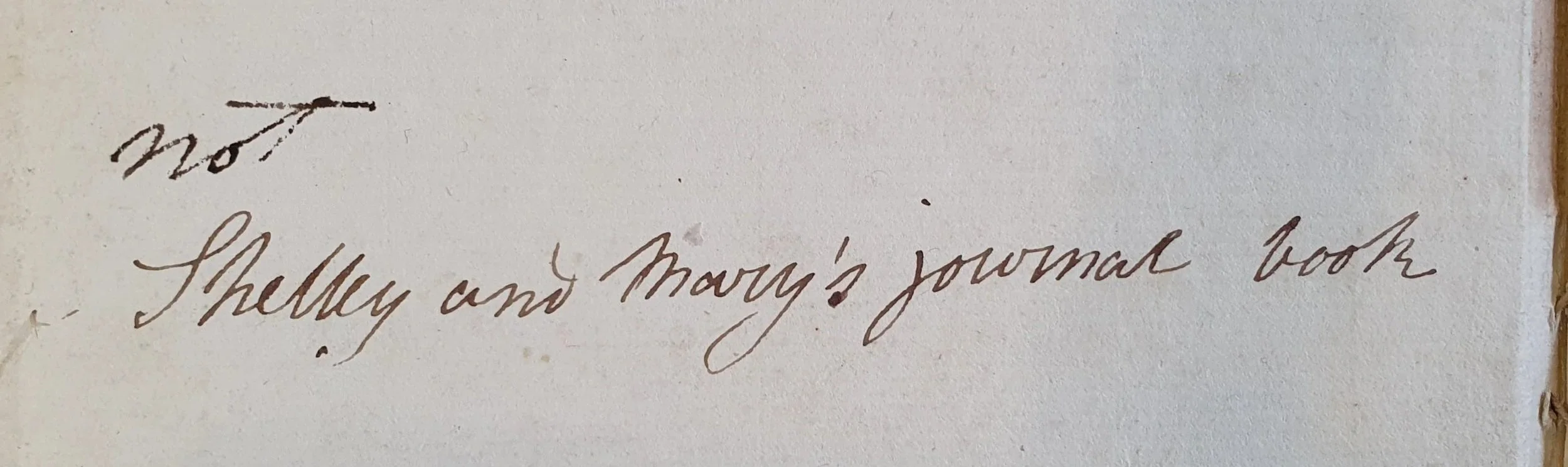
Inscription from the shared journal
Pages from the first draft of Mary Shelley’s Frankenstein were also there for us to see, with Percy’s marginal notes clearly distinguishable from the author’s clear handwriting, as well as a shared journal written by both Percy and Mary.
There was a first edition of the extremely rare 16-page pamphlet, The Necessity of Atheism, first published in 1811 and the cause of Shelley’s sesational expulsion from University College, Oxford.
It is believed that there are only six copies from the original 1811 print run of the pamphlet which have survivied into the twenty-first century since most were destroyed soon after publication. Amongst the treasures, we also saw a first edition of Queen Mab from 1813.
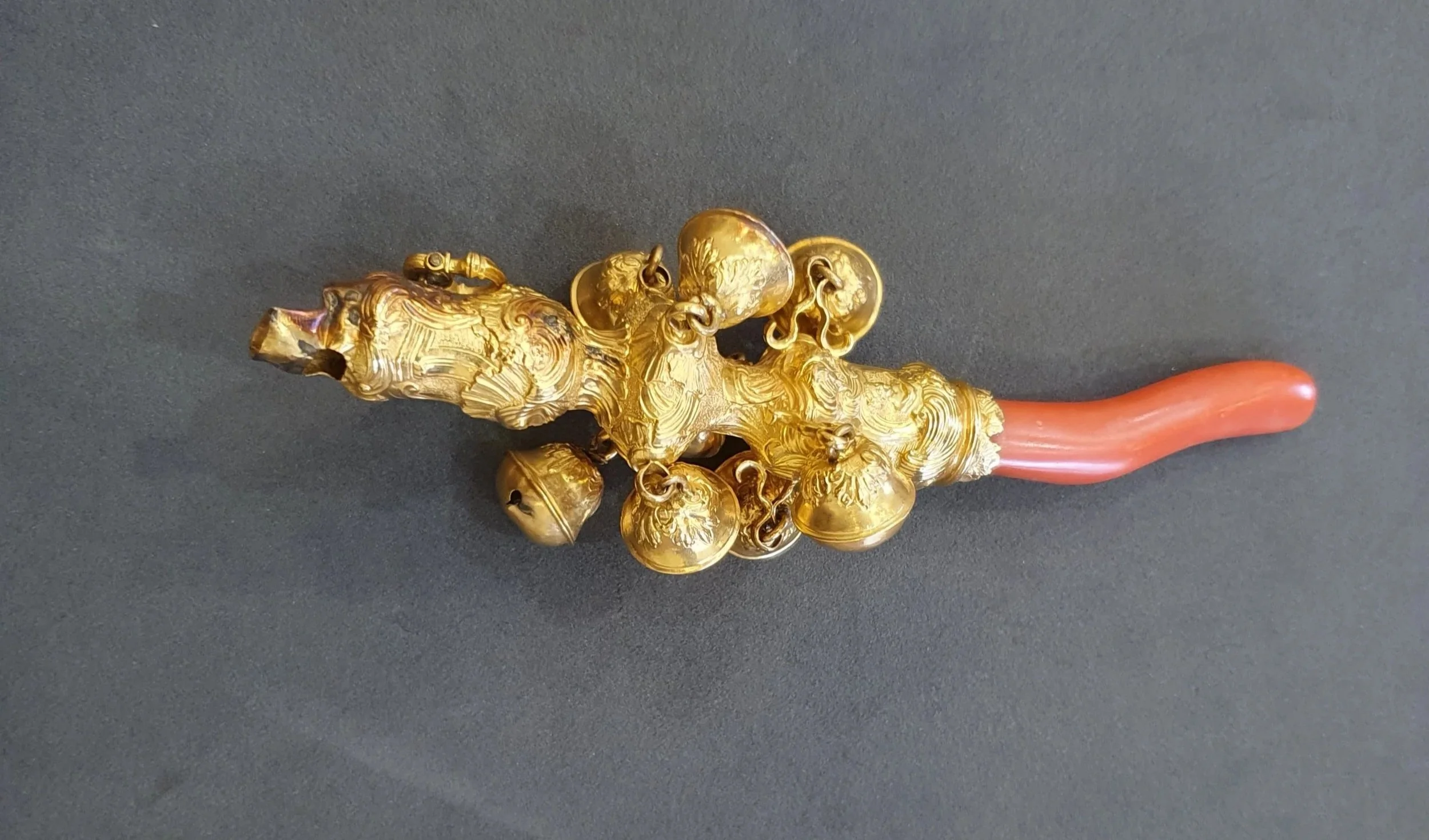
Rattle toy belonging to the infant Shelley
Finally, separate from his works, were some other fascinating domestic objects. Along with a golden toy rattle, that belonged to the infant Shelley in his pre-verbal days, was Shelley’s pocket watch, with seals which would have been used for letters hanging from it. There was also an early portrait from Field Place days.
It was, quite simply, breathtaking to be amongst these artefacts and to have them spread out before us so tantalizingly close, and not hidden away under glass.
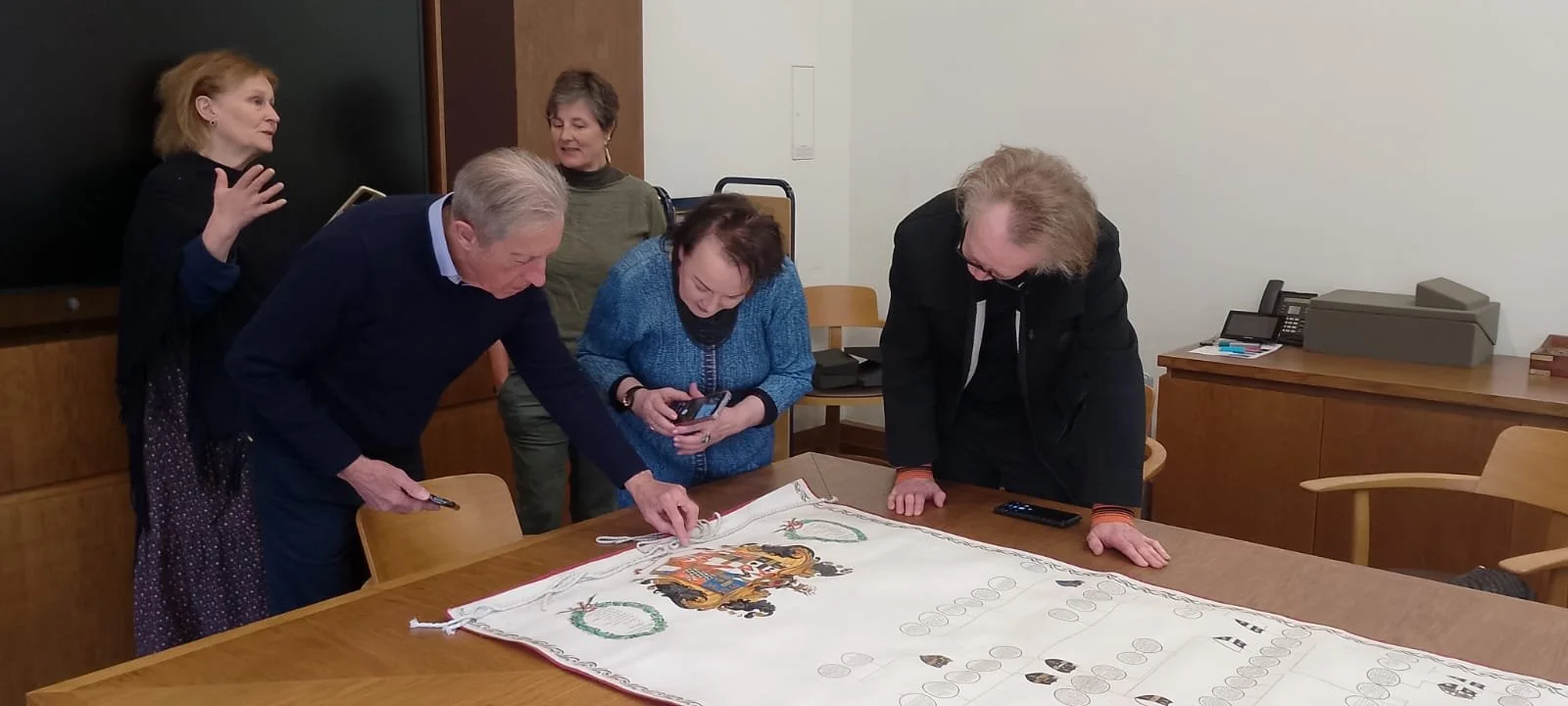
SMP members looking at the impressive Shelley family tree scroll
What a privilege to be in their presence at all more than 200 years later: a kind of literary magic, as though a hand being held out from history to bring Shelley back to life so vividly.
It’s difficult to describe how it felt, but it was certainly an eerie, goose-bumpy moment. Here was his handwriting, his crossings out, his doodles, his indecision and experimentation.
After spending time with these precious items, Hebron had one more surprise for us: he unrolled a scroll containing the Shelley family tree that was commissioned by Bysshe Shelley, Percy’s grandfather, and shows the family line stretching back to William the Conqueror. Measuring fifteen feet, it is quite an impressive document and warrants further study.
We are extremely grateful to Stephen Hebron for sharing his time, knowledge and expertise so generously with members of the project team.
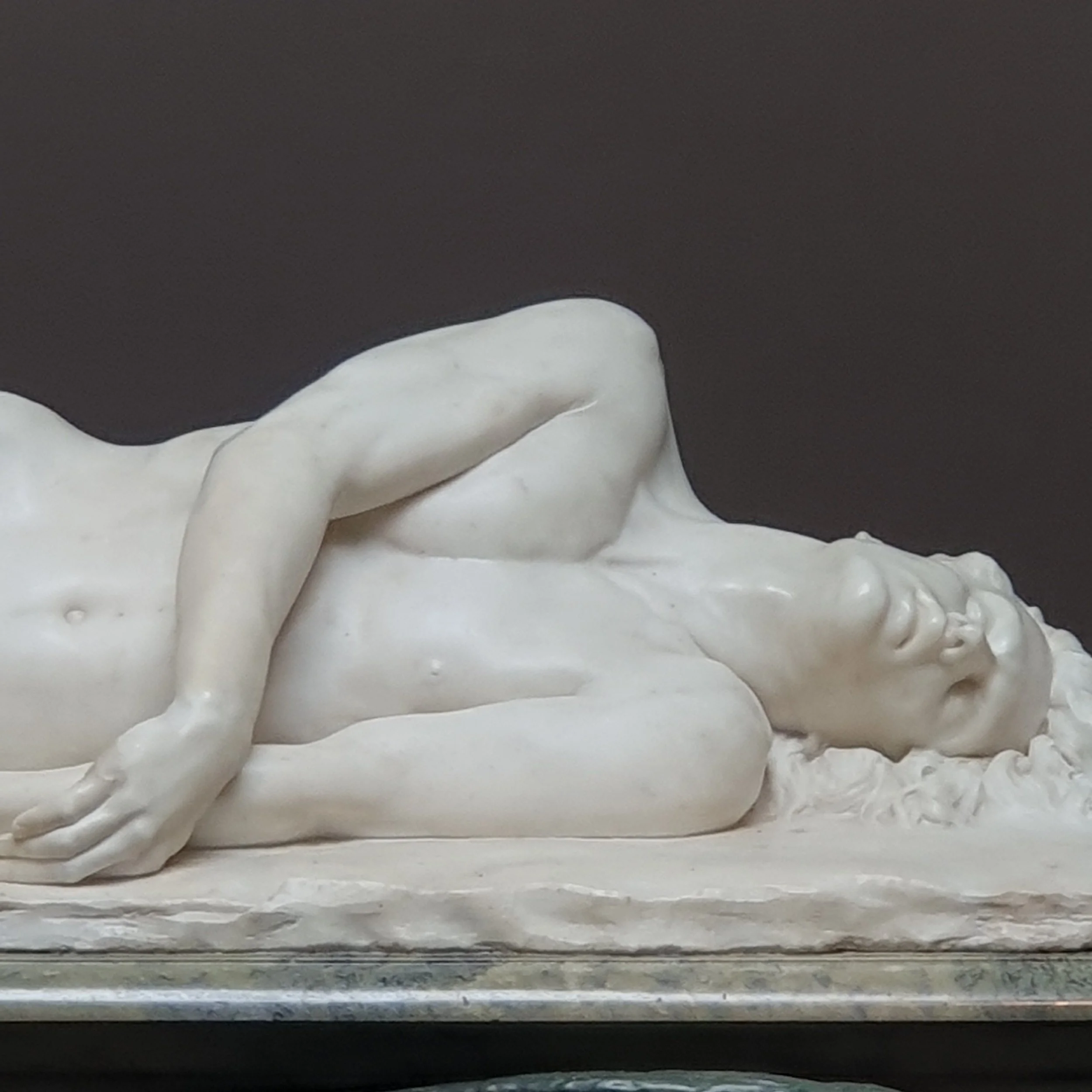
Detail from the Shelley Memorial at University College
Our final stop of the day was to the Shelley Monument in University College, originally made for the Protestant Cemetery in Rome but returned to Shelley’s old college and scene of his ignominious departure.
I found the sculpture both beautiful and unsettling, depicting the poet’s drowned body as if just dragged from the sea.
It seemed fitting to have begun the day with the rattle Shelley played with as a baby and then to finish at this commemoration to his untimely death, following his journey from cradle to grave.